At Red Hat’s OpenShift Commons Gathering in Atlanta on November 10, 2025, Joseph Kanjirathinkal, DevOps manager at Dell Technologies, and James Walton, principal solution architect at Red Hat, shared Dell Technologies' journey to modernize their developer experience by adopting Red Hat OpenShift Dev Spaces.
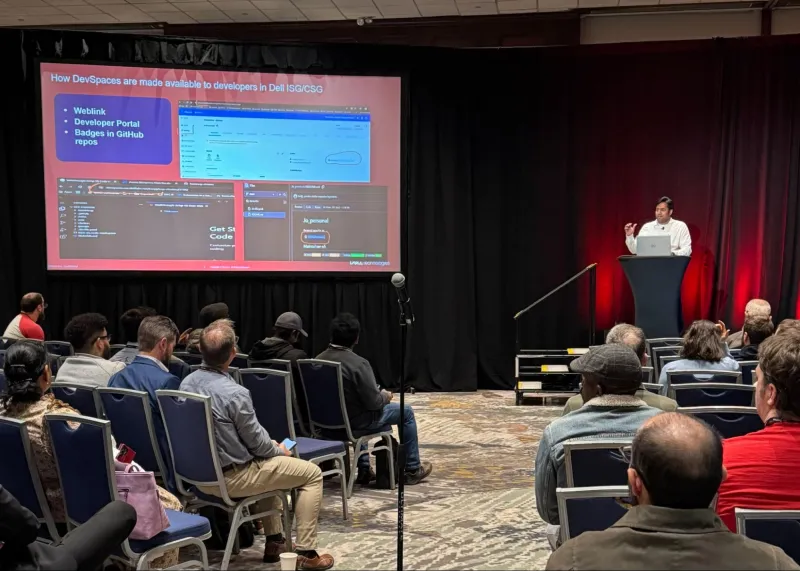
Image 1: Joseph Kanjirathinkal sharing how OpenShift Dev Spaces are made available to developers in Dell ISG/CSG
OpenShift Dev Spaces: A cloud development environment
To understand why Dell began this transition, it’s important to understand the technology itself. Red Hat OpenShift Dev Spaces is a layered product that is included with Red Hat OpenShift. This cloud-based, containerized development environment, built on the open source Eclipse Che project running on OpenShift, provides developers with consistent, pre-configured workspaces, eliminating the friction of local environment setup.
Key benefits of OpenShift Dev Spaces
- Standardization and consistency: By defining the entire development workspace as code (using a devfile in YAML), all developers use the exact same tools and configurations, which eliminates the infamous "it worked on my machine" problem.
- Accelerated onboarding: Developers can launch the environment in their browser and be ready to code in minutes, without needing to install local tools or extensions.
- Enhanced security: The source code lives on the OpenShift cluster and never lands on the user's local laptop, allowing the operations team to centrally control the security standards for the development environments.
Cost savings: Resources can be scaled to meet demand, and workspaces can be scaled down to zero when not in use, helping save money instead of buying costly, dedicated development hardware.
Streamlining the developer workflow
During the talk, Kanjirathinkal highlighted how Dell’s initial transition to OpenShift Dev Spaces streamlined the developer workflow, particularly in the Kubernetes-adopted environment which is typically broken down into an "inner loop" and an "outer loop."
- Inner loop (coding, debugging, testing): The iterative cycle where developers spend most of their time. OpenShift Dev Spaces provides rapid local testing and faster debugging, improving individual developer productivity.
- Outer loop (CI/CD, monitoring): The broader software development lifecycle. OpenShift Dev Spaces assists here by helping with streamlined integration and reducing deployment errors.
- Transition: The handoff between the 2 loops is smooth and consistent. OpenShift Dev Spaces provides an on-demand coding workspace for immediate microservice testing, giving the developer all the necessary permissions and privileges to start code and debug instantly.
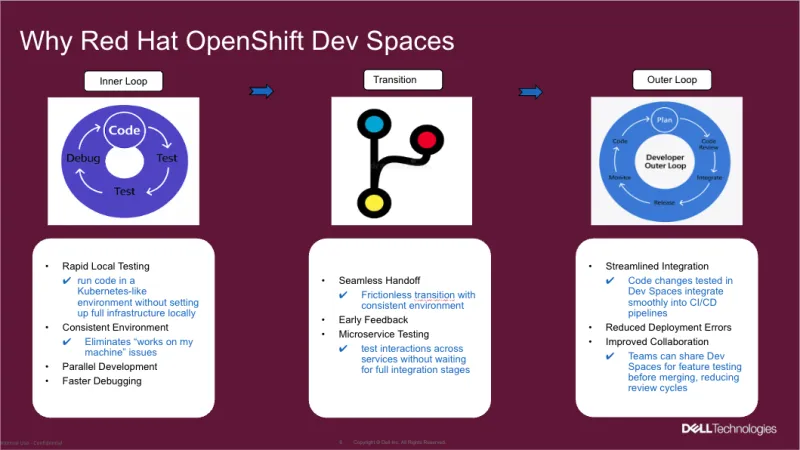
Image 2: Why Dell chose Red Hat OpenShift Dev Spaces
The Dell strategy: "Golden images" and customization
One of the most insightful moments of the presentation was Kanjirathinkal’s explanation of how Dell balanced the needs of 2 very different groups. He described OpenShift Dev Spaces as the "midpoint" between operations and development.
To achieve this, the Dell Technologies team came up with a "golden image" strategy. This provided a standard development workspace image built on common requirements, allowing Day 1 developers to start working immediately. However, Red Hat OpenShift remains flexible enough that developers can still compile the image with additional components and tools to customize it to their needs.
Integrating AI assistants into the inner loop
Beyond standard development, Kanjirathinkal demonstrated how OpenShift Dev Spaces can easily integrate with third-party AI tooling like Windsurfer for added benefits.
“Once logged into OpenShift Dev Space, the Windsurfer extension is installed, and credentials are made persistent,“ said Kanjirathinkal. “This integration accelerates the development process.”
James Walton of Red Hat noted the immediate productivity gains: “It actually took Jo longer to type out what he wanted than it did for the AI agent to generate the code." This focus on productivity led to significant returns on investment, including accelerated onboarding, reduced developer wait times, and a decrease in administrative costs for security efforts.
Conclusion: A blueprint for enterprise success
Dell Technologies' successful first phase of adopting OpenShift Dev Spaces showcases how enterprises can modernize their developer experience and maximize productivity. Through the Red Hat subscription model, Dell maintains access to the necessary support and services to keep their environments running smoothly.
Ready to modernize your development environment?
製品トライアル
Red Hat OpenShift Container Platform | 製品トライアル
執筆者紹介

Debbie Margulies is a principal product marketing manager for Red Hat OpenShift and has been at Red Hat since 2019 through the acquisition of StackRox.
チャンネル別に見る

自動化
テクノロジー、チームおよび環境に関する IT 自動化の最新情報

AI (人工知能)
お客様が AI ワークロードをどこでも自由に実行することを可能にするプラットフォームについてのアップデート

オープン・ハイブリッドクラウド
ハイブリッドクラウドで柔軟に未来を築く方法をご確認ください。

セキュリティ
環境やテクノロジー全体に及ぶリスクを軽減する方法に関する最新情報

エッジコンピューティング
エッジでの運用を単純化するプラットフォームのアップデート

インフラストラクチャ
世界有数のエンタープライズ向け Linux プラットフォームの最新情報

アプリケーション
アプリケーションの最も困難な課題に対する Red Hat ソリューションの詳細

仮想化
オンプレミスまたは複数クラウドでのワークロードに対応するエンタープライズ仮想化の将来についてご覧ください
